
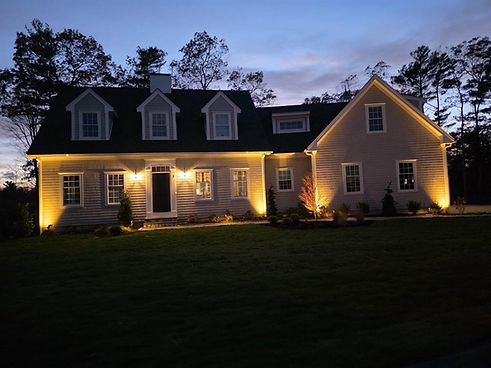
Landscape Lighting Installation in Fairhaven, MA
Dark properties aren’t just inconvenient. Unlit walkways, steps, and entrances create trip hazards, hide changes in grade, and make outdoor spaces difficult to use after sunset.
New England Tree & Landscape designs and installs professional landscape lighting that improves safety, defines walkways and outdoor areas, and highlights the property without harsh or excessive brightness. Proper lighting allows patios, walkways, and entrances to remain usable at night while improving the overall appearance of the landscape.
Call 508-763-8000 or email request@newenglandtreeandlandscape.com to request a free estimate.
Landscape Lighting That Makes Properties Safe After Dark
Dark yards and walkways at night create safety problems and make outdoor spaces unusable. You can't see steps, walkways are invisible, driveways become hazards, and landscape features disappear after sunset. Properties stay lit only by porch lights that create harsh shadows and don't reach far enough.
Landscape lighting fixes this by illuminating walkways, steps, entrances, outdoor living areas, and landscape features with low-voltage LED systems. Lights make properties safe to navigate after dark, highlight trees and architectural features, and extend the usability of outdoor spaces into evening hours. Done right, landscape lighting adds security without making properties look like parking lots.
Properties in Fairhaven, Mattapoisett, Marion, New Bedford, and Dartmouth need lighting that handles coastal weather and provides reliable illumination year-round. Professional landscape lighting uses low-voltage systems that stay safe, run efficiently, and light properties correctly without excessive brightness or wasted energy.
Pathway and Walkway Lighting
Pathway and walkway lighting illuminates routes from driveways to doors, through gardens, and between different outdoor areas. Path lights keep people from tripping, show where walkways go in the dark, and make properties accessible after sunset.
We install path lights along both sides of the main walkways or stagger them on one side, depending on the path width and light coverage needed. Fixtures get spaced to create consistent lighting without dark gaps. Too far apart, and people walk through unlit sections. Too close together and you waste fixtures and energy.
Path lights in Fairhaven properties need to handle coastal weather. Salt spray, wind, and moisture. Fixtures must be weatherproof and corrosion resistant. LED bulbs last years longer than halogen bulbs and use less electricity. Low-voltage systems stay safe even in wet conditions.
Walkway lighting works differently than just illuminating paths. We aim the lights to show path edges and texture without creating glare. Lights positioned too high or aimed incorrectly can blind people walking toward them. Proper path lighting lets you see where you're going without light shining in your eyes.
Mulch bed lighting along walkways adds ambient light and highlights plantings. Fixtures tucked into beds near paths provide additional illumination while showcasing plants and bed edges. This creates layered lighting that's more interesting than just path lights alone.


Lighting for Trees and Property Feature
Accent and spotlight lighting highlight trees, architectural features, and landscape elements worth seeing after dark. Uplighting trees creates dramatic silhouettes and shadow patterns. Spotlights aimed at house features emphasize architecture. Well-placed accent lights make landscapes interesting instead of just functional.
We use spotlights for trees, specimen plants, and focal points. Fixtures get positioned to light subjects from below or at angles that create depth and shadow. Direct lighting from straight on flattens subjects and looks boring. Angled lighting creates dimension and visual interest.
Mature trees with interesting bark or branch structure benefit from uplighting. Light travels up the trunk and into the canopy, creating focal points visible from inside houses and across properties. Properties in areas like West Island or Sconticut Neck with established trees gain significant visual impact from strategic tree lighting.
Accent lighting in mulch beds highlights plantings and creates depth. Small spotlights aimed at shrubs or architectural plants add layers of light throughout landscapes. This prevents the flat look that comes from only lighting walkways and leaving beds dark.
Lighting should enhance landscapes, not overpower them. Too many accent lights or fixtures too bright create a cluttered appearance. We balance accent lighting with functional lighting, so properties look intentional, not randomly spotted with lights everywhere.
Step and Stair Lighting
Step and stair lighting prevents falls and makes grade changes safe to navigate in darkness. Steps that aren't lit are trip hazards. People misjudge where steps start, miss treads, or stumble on uneven risers they can't see.
We install step lights in riser faces or along step edges to clearly show each tread. Lights mounted in risers illuminate the tread below without creating glare for people descending stairs. Edge lighting along step sides marks boundaries and shows where steps begin and end.
Front entrance steps especially need lighting because visitors unfamiliar with properties can't navigate the steps they don't know. Well-lit entrance steps reduce liability and make properties welcoming instead of hazardous after dark.
Deck and patio steps connecting to the yard need lighting, too. People carrying items, moving between spaces, or just not paying attention miss unlit steps. Step lighting makes transitions between levels safe and obvious.
Landscape lighting for steps gets planned during the design phase before hardscaping installation. Running wire after the steps are built results in needing to drill or retrofit fixtures. Planning ahead means cleaner installations with hidden wiring.


Patio and Deck Lighting
Outdoor living space lighting makes patios, decks, and seating areas usable after sunset. Spaces too dark to see become functional for dining, entertaining, or just sitting outside during evening hours.
We design lighting for how spaces get used. Dining areas need moderate light levels for eating and conversation. Seating areas can be dimmer for ambiance. Cooking areas near grills need brighter task lighting. Each zone gets appropriate light levels instead of uniform brightness everywhere.
Overhead lighting from pergolas, covered patios, or nearby structures provides general illumination. We supplement with landscape lighting around the perimeter that adds layers without harsh overhead brightness. This creates comfortable light levels without feeling like you're sitting under floodlights.
Lighting water features, fire pits, or outdoor kitchens adds functionality and visual interest. These elements become focal points at night when properly lit. Without lighting, they disappear after dark and lose impact.
Mulch bed lighting around patios defines edges and highlights plantings visible from seating areas. This extends lighting beyond patio surfaces and integrates outdoor living spaces with surrounding landscapes instead of creating isolated bright spots in dark yards.
Increased Safety and Security After Dark
Security and safety lighting make properties visible after dark and discourage unwanted activity. Lit properties signal presence and awareness.
We focus lighting on entrances, driveways, walkways, and side yards where visibility matters most. Motion-activated fixtures add security without running all night, turning on only when someone approaches.
Safety lighting reduces accident risk by clearly illuminating driveways, steps, grade changes, and walking paths. This improves visibility without flooding the property with excessive light.
Commercial properties rely on lighting for parking areas, entrances, and perimeters to protect customers and staff. Proper balance is key. Effective systems provide coverage where needed without wasting energy or creating light pollution.
Installation
We install low-voltage LED landscape lighting systems designed for long-term reliability. Wiring is routed along planned paths and buried deep enough to avoid damage from lawn aeration and routine maintenance without excessive digging. Direct-burial wire rated for underground use prevents moisture damage and deterioration.
Transformers convert standard household power to 12-volt current and are sized based on total system load to avoid overload or wasted capacity. They’re typically mounted in garages, basements, or protected exterior locations where they remain accessible for timers and adjustments.
Fixtures are positioned and secured during installation to ensure proper lighting and long-term stability. Timers or photocells automate operation so the system runs consistently without manual control.
Common Landscape Lighting Problems
Many properties are unusable after dark because they rely only on porch lights, which don’t illuminate yards, walkways, or features. Proper landscape lighting extends usable outdoor space into the evening.
Unlit walkways and steps create real trip and fall risks. Path and step lighting solve this by clearly defining walking areas and elevation changes.
Landscapes that look good during the day often disappear at night. Trees, gardens, and architectural features need accent lighting to remain visible and add nighttime curb appeal.
Overly bright systems are caused by poor design or the wrong fixtures. Landscape lighting should provide targeted illumination, not flood a property with harsh light.
Lighting failures usually come from cheap fixtures, shallow wiring, or improper installation. Quality components and correct installation prevent outages, wire damage, and repeated repairs.
Getting Started with Landscape Lighting
Properties throughout Fairhaven, Mattapoisett, Marion, New Bedford, Acushnet, Rochester and Dartmouth need landscape lighting that makes outdoor spaces safe and usable after dark. Professional design and installation create systems that work reliably and light properties correctly.
Call 508-763-8000 or email request@newenglandtreeandlandscape.com. We'll schedule a site visit, assess your lighting needs, design a system that illuminates the appropriate features, and install low-voltage LED landscape lighting. Whether it's new construction that needs complete lighting or an existing property that requires safety and accent lighting, professional landscape lighting makes properties functional at night.
35 years in business. Local crew based at 232 Huttleston Avenue in Fairhaven. Family-owned. We're the caring professionals.
FAQ's
What benefits does landscape lighting provide beyond appearance?
Landscape lighting improves safety, security, and usability. Proper lighting makes walkways, steps, and entries safer at night and helps deter unwanted activity. In areas like Fairhaven and nearby coastal towns, it also extends the use of outdoor spaces during long summer evenings.
Why is professional installation better than DIY landscape lighting?
Professional installation ensures proper fixture placement, correct wiring, and balanced light levels that do not cause glare or uneven coverage. On the South Coast, professionals also account for coastal weather, soil conditions, and long-term durability so systems perform reliably year after year.
Does outdoor landscape lighting noticeably increase electric costs?
Modern LED landscape lighting uses very little electricity. For most homes, the added cost is minimal, especially compared to older lighting systems. Many homeowners in the Fairhaven area run their lighting nightly without seeing a significant change in their electric bill.
Which areas of a yard should landscape lighting focus on?
Lighting should focus on walkways, steps, entrances, patios, and key landscape features like trees or stonework. In coastal Massachusetts properties, lighting is often used to improve visibility around outdoor living areas and highlight focal points without overpowering the space.
Can landscape lighting be automated or controlled with timers?
Yes. Most landscape lighting systems can be set on timers or automated controls, so they turn on at dusk and off at a set time. This provides consistent lighting without manual operation and helps manage energy use throughout the season.
How bright should landscape lighting be to look good without overwhelming the yard?
It should be bright enough to see clearly but not flood the space. We use layered lighting with different intensities so nothing looks harsh or overexposed. The goal is visibility and depth, not lighting the yard like a parking lot.
Should landscape lighting be planned before installing patios, walkways, or steps?
Yes, it should be planned before installation. That allows wiring to be run cleanly and avoids tearing into finished hardscaping later. Retrofitting lighting after the fact is always more limited and more invasive.
Which areas of my yard should be prioritized for landscape lighting first?
Start with walkways, steps, driveways, and entrances where visibility matters. After that, we layer in patios, seating areas, and key features like trees or stonework. Safety and function come first, then aesthetics.