

Snow Removal Service for Commercial Properties
in Fairhaven, MA
When snow hits, your business can't afford to wait - that's why we clear commercial properties during the storm, not after it's over.
Commercial properties across the South Coast trust New England Tree & Landscape for snow removal because we keep you operational when it matters most.
We plow parking lots to keep access open, clear walkways and entrances for safe movement, apply de-icing to prevent refreezing, and install snow stakes to protect curbs, hydrants, and landscape features before winter starts.
A plowed lot with ice or hidden obstacles is still a liability. Snow removal only works when everything is planned and handled together.
Commercial Snow Removal in Fairhaven, MA
Commercial snow removal isn't like residential snow clearing. Businesses face different problems. You've got customers and employees who need safe access to your building. You've got town regulations that require snow cleared within specific timeframes after storms end. You've got liability if someone slips on your property. And you've got a business to run that can't shut down every time it snows.
Last winter, several New Bedford businesses called us mid-season when their current contractor stopped showing up. Storms would hit and they'd wait hours for plowing that never came. Meanwhile, they're violating town ordinances, customers can't access their building, and they're one slip-and-fall away from a lawsuit. That's the reality of unreliable snow removal for commercial properties.
We handle commercial snow removal for retail centers, office buildings, medical facilities, and industrial properties across Fairhaven, MA. When snow hits, our crews are out clearing lots and walkways so businesses can operate safely and stay compliant with local regulations.
Why Commercial Properties Need Professional Snow Removal
Fairhaven, like most South Coast municipalities, has ordinances requiring businesses to clear snow from parking lots, walkways, and sidewalks within specific timeframes after storms. Exact requirements vary by town, but generally, businesses need snow cleared within 12-24 hours after snowfall ends. Some towns are stricter for public sidewalks adjacent to commercial properties.
Failure to clear snow in the required timeframe can result in fines from the town. But that's the least of your problems. Snow that doesn't get cleared properly melts during the day and refreezes at night, creating ice. Ice creates slip hazards for customers and employees.
Slip-and-fall accidents on commercial property can lead to injury claims and lawsuits against the business owner.
Property owners are liable for maintaining safe access to their buildings. That includes keeping parking lots, walkways, and entrances clear of snow and ice during winter. If someone gets hurt on your property because you didn't properly manage snow and ice, you're facing potential legal action. Insurance might cover it, but your rates go up and you still deal with the hassle of a claim or lawsuit.
Professional snow removal keeps you compliant with town regulations, reduces liability exposure, and keeps your business accessible when it snows. Costs less than dealing with fines, lawsuits, or lost business because customers can't safely access your property.


Commercial Snow Plowing
Snow plowing clears parking lots, driveways, and access roads at commercial properties. We use trucks with plow blades to push snow off paved surfaces and stack it in designated areas where it won't block parking spaces, dumpsters, or access points.
Commercial lots need different plowing strategies than residential driveways. You've got more area to clear, specific traffic patterns to maintain, fire lanes that must stay open, handicap spaces that need priority clearing, and places where we can and can't stack snow.
We plow based on snow depth and storm timing. Light snow under 2 inches might just need one pass after the storm ends. Heavier storms require multiple visits. An initial pass while it's still snowing keeps things passable, then continued cleanup until the snow stops. Multi-day storms with continuing snowfall need repeated plowing to prevent snow from piling up and freezing into ice.
Timing matters for commercial plowing. Most businesses want lots cleared before opening hours so customers and employees have safe access. That means we're plowing overnight or early morning during and after storms. Retail properties might need plowing during business hours if storms hit at bad times. Medical facilities and 24-hour operations need immediate response regardless of when snow falls.
We stack snow where it doesn't create problems. Away from building entrances. Out of parking spaces and drive aisles. Clear of dumpster access. Not blocking fire lanes or emergency vehicle access. Where it can melt and drain without creating flooding issues later.
Some properties have limited space for snow storage. When we run out of room to stack snow, it needs hauling away. We load snow into trucks and remove it from the property. That costs more than just plowing, but sometimes it's necessary to keep a lot functional through winter.
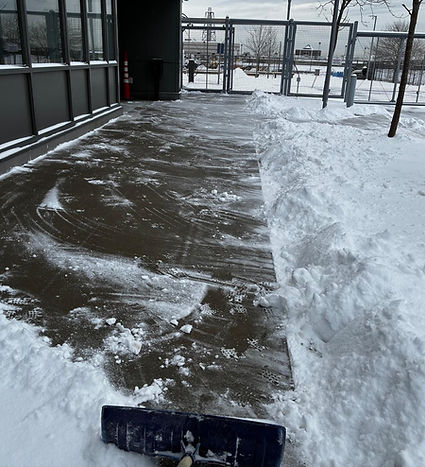
Snow blowing and shoveling clears walkways, entrances, stairs, and areas too tight for plowing equipment. Commercial properties have plenty of spots where trucks can't reach. Sidewalks along buildings, paths between parking rows, entryways, loading docks, dumpster areas.
We use walk-behind snow blowers for wider walkways and areas with moderate snow depth. Blowers work faster than shoveling and handle 6-12 inches of snow efficiently. For deeper snow or very wide paths, we might bring larger blowers. For tight spaces, corners, stairs, or around obstacles, we shovel by hand.
Entrances get priority clearing. That's where people walk the most and where slip hazards cause the biggest problems. We clear entrance walkways wider than just the minimum path. Gives people room to walk safely and provides space for snow from subsequent storms.
Public sidewalks adjacent to commercial properties are the business owner's responsibility in most South Coast towns. Width requirements vary but generally businesses need to clear a 36–48-inch path within 12-24 hours after snow stops. Failure to clear public sidewalks can result in fines and creates liability if someone falls on an uncleared section in front of your property.
We handle snow blowing and shoveling as part of complete commercial snow removal service. Plow the lot but leave walkways buried and you've just made your property partially accessible. Customers can drive in but can't safely walk to your building. That doesn't work.


De-icing and salting prevents ice formation and melts existing ice on parking lots and walkways. We apply salt or ice melt products to paved surfaces after plowing and shoveling to prevent refreezing and improve traction.
Salt works by lowering the freezing point of water. Spread it on pavement and snow/ice melts even when temps are below 32 degrees. Salt effectiveness drops as temps get colder. Works great at 25 to 30 degrees, less effective at 15 to 20 degrees, pretty much stops working below 10 to 15 degrees.
We have special ice melt products that work at lower temperatures than regular rock salt. We use these for extreme cold or when regular salt isn't effective. Costs more than rock salt but works better when it's very cold.
Parking Lot Salting and Sanding
Parking lot salting happens after plowing to prevent snow melt from refreezing overnight. Daytime temps might hit 35 to 40 degrees and melt snow on pavement.
Then overnight temps drop to 20 degrees and that water freezes into ice. Salt prevents that cycle by keeping water from freezing.
Some commercial properties want pre-treatment before storms. We apply salt or brine before snow starts to prevent bonding between pavement and snow. Makes plowing easier and reduces ice formation. Works well for light storms or freezing rain events. Less effective for heavy snowfalls where plowing is the main solution.
Application rates matter for parking lots. Too little salt and you're wasting time because it won't work. Too much salt and you're wasting product and money. We adjust salt amounts based on conditions. How much moisture is present, current and forecast temperatures, whether we're preventing ice or melting existing ice.
We use a different salt for roads and parking lots than we do for sidewalks. Parking lot salt handles heavy vehicle traffic and larger surface areas.
Sidewalk Salting
Sidewalk salting gets done after we clear walkways. Pedestrian areas need more attention than parking lots because people walking are more likely to slip and fall than vehicles sliding on ice.
Sidewalks get more foot traffic and need to be safe faster. Calcium chloride works at lower temps than rock salt and melts ice quicker, which matters for high-traffic walkways and building entrances.
For sidewalks, we use pet friendly salt that's safer for animals and less harsh on concrete. This matters for businesses where customers might bring dogs or where wildlife crosses walkways.
Application rates on sidewalks are lighter than parking lots. Too much product creates slippery residue or tracks into buildings. We apply enough to melt ice and provide safe walking surface without excess that causes other problems.
Building entrances and stairs get extra attention. These are the highest-risk areas for slips and falls. We make sure these spots get treated thoroughly and check them after initial application to see if more treatment is needed.
When to Call for Emergency Snow Removal
Your regular contractor doesn't show up during a storm. Your lot isn't getting cleared and you're facing town violations and customer access problems. You need someone who can respond now, not next week.
We take emergency calls from commercial properties whose contractors failed to perform. We can't always help mid-storm if we're fully committed to existing clients, but we try to fit in emergency work when possible. Better solution is contracting with a reliable company before winter, so you don't end up scrambling during storms.
Properties that switch contractors' mid-season usually do it because their current company consistently failed to show up, cleared snow inadequately, or didn't respond to communication. That's avoidable by hiring the right contractor in the first place and setting clear expectations about response times and service levels.
Why choose us?
Reliability matters most for commercial snow removal. You need a contractor who shows up every storm, clears your property completely, and responds when you call with issues. Cheap pricing doesn't matter if your lot doesn't get plowed and you're violating town ordinances or facing customer complaints.
Response time expectations should be clear in your contract. How quickly after snow stops will plowing begin? What depth triggers a plow visit? Who do you call if there's problems during a storm? All of this needs to be spelled out so both sides understand the agreement.
Equipment and crew capacity affects reliability. Contractors with limited equipment or crews get overwhelmed during big storms and can't service all their properties properly. We maintain enough trucks, blowers, and crew to handle our contracted properties even during major storms.
Insurance and liability coverage protects you. Commercial snow removal involves heavy equipment operating on your property. Damage can happen. Curbs get hit, light poles get damaged, pavement gets scraped. Your contractor needs proper insurance so you're not liable for their mistakes. Local knowledge helps. We've been clearing commercial properties around Fairhaven for decades. We know which lots have weird drainage issues. Which properties flood if snow gets stacked in certain spots. What the town regulations are for different areas. Where we can and can't put snow based on property lines and easements.
Get Commercial Snow Removal Set Up Before Winter
Most commercial properties contract for snow removal before winter starts. We sign agreements in October and November that cover the whole season. When snow hits, we're already set up with site maps, billing information, and clear expectations about service levels.
Last-minute sign-ups right before first snow are harder. We might not have capacity to take on new properties if we're already committed to existing clients. Sites need evaluation to figure out plowing routes, snow storage locations, and access issues. All of that takes time that doesn't exist when a storm is 24 hours away.
Call us at 508-763-8000 or email us at request@newenglandtreeandlandscape.com to discuss commercial snow removal for your property. We'll come out, look at your lot and walkways, talk about your needs and expectations, and give you an estimate for seasonal service. Get it handled before winter, and you won't spend storms wondering if your contractor is going to show up.
FAQ's
Can property owners be held liable for slips on icy driveways?
Yes. Property owners can be liable for slip-and-fall injuries if snow and ice create unsafe conditions, as established in Papadopoulos v. Target (2010). Property owners who wait too long to clear snow and ice risk creating hazardous sheets of ice that endanger tenants, visitors, and pedestrians.
What does professional snow removal typically cost in Massachusetts?
Professional snow removal costs vary depending on the amount of snow and size of the lot. Contact New England Tree & Landscape at 508-763-8000 for a quote specific to your property.
Are landlords legally responsible for snow and ice removal in Massachusetts?
Yes. Massachusetts regulations require landlords to keep exterior stairs and walks clear (105 CMR 410.260). Building code also requires stairways and fire escapes to be kept free of snow and ice.
Are property owners required to shovel sidewalks in Massachusetts?
Yes, in many Massachusetts cities and towns. Cities and towns may pass bylaws requiring timely removal of snow and ice from sidewalks (MGL c. 85, § 5). Fines and penalties may apply if walkways remain hazardous. Always check with your local Department of Public Works for specific rules in your town.
How soon must sidewalks be cleared after snowfall in Massachusetts?
Most towns require sidewalks to be cleared within a few hours after snow ends. For example, Boston enforces a four-hour rule during the day. Massachusetts law generally requires snow and ice to be removed within a "reasonable time," which in many towns means just a few hours after snowfall ends.
Why choose New England Tree & Landscape for professional snow removal services?
New England Tree & Landscape has decades of local experience, the right equipment, and a reliable crew that understands Massachusetts snow laws and safety standards. In 35 years of commercial snow removal, they've never had a single lawsuit, a record built on doing things the right way and understanding the importance of prompt snow removal timing.
Do you provide residential snow removal services?
No. New England Tree & Landscape focuses exclusively on commercial snow removal services. We service commercial properties such as parking lots, business entrances, and walkways across Fairhaven and the South Coast. Residential driveway snow removal is not part of our service offerings.