

Erosion Control Services in Fairhaven, MA
Every spring, slopes wash out, soil disappears from beds after every storm, and the same bare patches keep coming back no matter how many times you reseed them. That is not a lawn problem. It is an erosion problem, and throwing grass seed at it will not fix it.
New England Tree & Landscape designs and installs erosion control systems for South Coast Massachusetts properties. Retaining walls, hydroseeding, sod, grading, mulch, and vegetation, matched to your property's slope, soil type, and what is actually driving the erosion.
Call 508-763-8000 or email request@newenglandtreeandlandscape.com for a free estimate.
Erosion Control Planning and Site Assessment
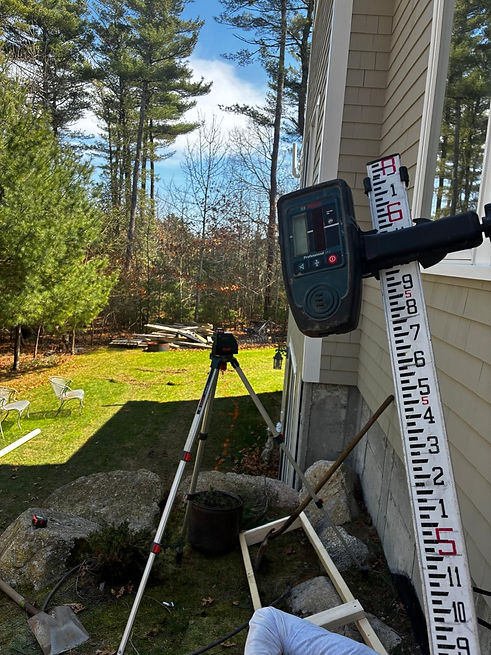
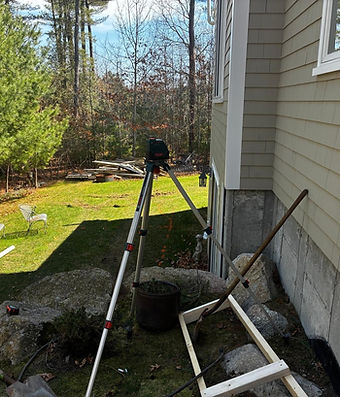
Landscape design and landscape design plans always have to account for elevations. Before any installation starts, whether it is erosion repair, a full redesign, or a new build, we use a laser level to map existing elevations across the property. That tells us exactly where water is moving, where soil is losing support, and what grade corrections need to happen before anything gets planted or built.
Most erosion problems we see across Fairhaven, Acushnet, and New Bedford trace back to one of three things: water moving too fast down a slope with nothing slowing it, soil that has no root structure holding it in place, or a grade that sends runoff directly into a bank or bed. Many properties have all three at once.
Sandy glacial soils common across North Fairhaven and Mattapoisett erode differently than the clay-heavy soils in Acushnet Heights. Sandy soil loses surface material fast when water moves across it. Clay holds together longer but fails in sheets when it gets saturated. What works on one property does not automatically work on the other.
We check elevations throughout the entire property, not just the problem area, because water does not stay where it looks like it should. A grade correction in one spot that sends water somewhere it cannot go creates a new problem.
We look at slope angle, soil composition, what is upslope sending water onto the problem area, and what is downslope receiving it. Soil running into a neighbor's yard or a storm drain can create liability. The plan addresses all of it before installation begins.
Slope Stabilization
A slope that is actively washing out gets worse with every storm. Water cuts channels into the surface, those channels collect more water next time, and the erosion accelerates. Waiting makes the fix more expensive.
Slope stabilization depends on how steep the grade is and what the soil profile looks like underneath. Gentle slopes under about 3:1 can often be stabilized with deep-rooted vegetation, erosion control blankets, and proper grading at the top of the slope to reduce the volume of water hitting it. Steeper slopes and those with loose or sandy soil usually need structural help, either a retaining wall, riprap, or a combination of both, before any planting goes in.
Properties on hillier streets in Acushnet Center and near Howland Mill in New Bedford deal with slopes that have been slowly failing for years. Each nor'easter strips a little more. By the time a homeowner calls us, the topsoil is gone and the subgrade is exposed. In those situations, stabilization starts with getting soil back onto the slope and holding it there while vegetation establishes.
Erosion control blankets are installed on stabilized slopes to protect disturbed soil while seed germinates. The blanket breaks down naturally over one to two seasons as root systems fill in and take over the stabilization work.
Retaining Walls for Erosion Control
When a slope is too steep to stabilize with grading and vegetation alone, a retaining wall stops the movement at the source. The wall holds back soil, creates a level area behind it, and redirects water rather than letting it carry material downhill.
Retaining walls built for erosion control are designed differently than decorative walls. They need proper drainage behind them. Water that saturates soil behind a wall with nowhere to go builds hydrostatic pressure and pushes the wall over. Most wall failures we see come from walls that were built without drainage planning, no gravel backfill, no weep holes, no drainage pipe at the base.
We install drainage as part of every retaining wall project. Gravel backfill behind the wall creates a drainage zone. Weep holes every four to six feet along the base let water escape before pressure builds. On taller walls over four feet, this drainage planning is also a permit requirement.
Common applications on South Coast properties include walls at the base of eroding banks near driveways and foundations, terraced walls on hillside properties in Fairhaven and Rochester, and walls along property lines where slopes drop toward neighboring lots.


Grading and Slope Correction
Water moves to the lowest point available. If that point is a foundation wall, a neighbor's yard, or the middle of a planted bed, the erosion follows. Grading corrects the direction water travels before it picks up speed and carries soil with it.
We use laser levels to establish target elevations before any soil gets moved. The finished grade needs a minimum 2 percent slope away from structures, about 2 inches of drop for every 10 feet. On sloped properties, we also create positive drainage paths that direct runoff toward a safe discharge area rather than letting it sheet across open soil.
Grades that were set correctly at construction shift over time. The South Coast sees 50 to 60 freeze-thaw cycles each winter. The ground expands, contracts, and settles unevenly.
Properties in North Fairhaven and Acushnet Center that were graded properly a decade ago may now be sending water in the wrong direction. The laser level catches what the eye misses.
Where regrading alone cannot solve the problem, we combine slope correction with retaining walls, erosion control planting, or hydroseeding to stabilize the surface while the corrected grade redirects water flow.
Hydroseeding for Erosion Control
Bare soil exposed by erosion, grading work, or construction is vulnerable. Every rain event strips a little more until something covers it. Hydroseeding gets vegetation established faster than any other seeding method and is one of the most effective erosion control tools available for large or sloped areas.
Hydroseeding sprays a slurry of grass seed, wood fiber mulch, fertilizer, and tackifier directly onto prepared soil. The tackifier bonds the mulch layer to the soil surface, holding everything in place during rain while seeds germinate underneath. On slopes where broadcast seeding would wash away before it establishes, hydroseeding stays put.
South Coast properties near Buzzards Bay deal with coastal winds that dry out newly seeded areas faster than inland sites. The mulch layer in hydroseeding holds moisture against the seed zone, reducing watering requirements and protecting germinating seedlings from wind and sun.
Hydroseeding works best when the underlying grade and erosion issues have been addressed first. Seeding over an active erosion problem only delays the failure. We assess the site before recommending hydroseeding as a standalone solution versus one part of a broader erosion control plan.
Typical residential projects in Fairhaven and Mattapoisett run $0.15 to $0.35 per square foot depending on site conditions, seed blend, and preparation required.


Sod Installation for Slope Stabilization
When a slope needs immediate stabilization and cannot wait the three to four weeks it takes hydroseeding to establish, sod is the right choice. Sod provides instant root coverage and holds soil in place from day one.
Sod installation on slopes requires more preparation than flat lawn installation. The subgrade needs to be properly graded and compacted before any sod goes down. Sod laid over loose or improperly graded soil will shift, separate at the seams, and fail to root. On steeper slopes, sod pins hold sections in place while roots establish.
Properties in East Fairhaven and along Sconticut Neck Road where erosion has already stripped topsoil may need loam brought in before sod can be installed. We assess the soil depth first. Sod installed over two inches of topsoil will not develop the root system needed to stabilize a slope long term.
For properties where a section of slope has failed and needs immediate repair, sod can be installed on the problem area while hydroseeding covers surrounding sections. The combination addresses urgency without the cost of sodding an entire hillside.
Mulching for Erosion Control
Mulching does two things for erosion control. It protects bare soil in planting beds and around trees from the direct impact of rain, which loosens surface particles and starts the erosion process. It slows the speed of water moving across a surface, giving it time to infiltrate rather than running off and carrying soil with it.
Beds without mulch on sloped properties in Fairhaven and Acushnet lose topsoil with every storm. The exposed soil between plants is the most vulnerable point on the slope. A three-inch layer of shredded bark or wood chip mulch breaks the impact of raindrops and reduces surface runoff velocity enough to keep soil in place.
Mulch needs to be replenished. It breaks down over one to two seasons depending on material type and weather exposure. Annual mulch application is one of the lowest-cost erosion control maintenance practices available.
On steeper slopes, mulch alone is not enough. It will wash away before it can do its job. Slopes over about 25 degrees need erosion control blankets, structural solutions, or deep-rooted plantings before mulching.
Groundcovers, native shrubs, and ornamental grasses planted on these slopes hold the soil structurally while mulch fills the gaps between them. We assess the grade before recommending mulch as a primary control rather than part of a broader plan.

Erosion Control Planting and Vegetation
Deep-rooted vegetation is the most permanent erosion control solution available. Roots bind soil particles together, slow water infiltration, and absorb moisture that would otherwise become runoff. Once established, a well-planted slope requires no maintenance to hold.
The right plants depend on slope angle, sun exposure, soil type, and how wet the area stays. Native species adapted to South Coast Massachusetts soils establish faster and require less maintenance than non-native alternatives. They are also better suited to the region's freeze-thaw cycles and coastal conditions.
For gentle slopes in partial shade, native ferns, sedges, and creeping juniper provide dense ground coverage without aggressive spreading. For sunny exposed slopes, native grasses like little bluestem and switch grass develop root systems deep enough to hold soil on grades that most ornamentals cannot stabilize. Steeper banks in Fairhaven and Acushnet often benefit from a combination of low shrubs like native viburnums for structural root mass and groundcovers to fill the gaps between them.
Rain gardens incorporated into low areas at the base of slopes slow incoming runoff and give it time to infiltrate rather than continuing downslope. Native sedges, rushes, and moisture-tolerant perennials planted in these areas absorb the water that collects there and reduce the erosion load on the slope above.
Our landscape design team selects plant species based on your property's specific conditions, not a generic list. What thrives on a sandy hillside near the water in Mattapoisett is different from what holds a clay bank in Acushnet Center.

Drainage Solutions for Erosion Problems
Water is the driver behind most erosion. Controlling where it goes and how fast it moves is often the most effective first step before any physical erosion control is installed.
If a slope is eroding because runoff from uphill is overwhelming it, stopping the water at its source with a curtain drain or swale reduces the erosion load before it reaches the problem area.
Our yard drainage solutions page covers the full range of drainage systems we install, including French drains, catch basins, swales, dry wells, and downspout drainage.
For erosion problems where water management is part of the fix, drainage and erosion control work is designed together so each system supports the other.
Why South Coast Property Owners Call Us
New England Tree & Landscape is a family-owned company based at 232 Huttleston Avenue in Fairhaven. We have been working on South Coast Massachusetts properties for over 35 years.
We serve Fairhaven, New Bedford, Acushnet, Mattapoisett, Marion, Rochester, Dartmouth, and communities throughout Bristol and Plymouth Counties.
Call 508-763-8000 or email request@newenglandtreeandlandscape.com to schedule your free estimate.
FAQ's
When is a retaining wall necessary for erosion control?
Retaining walls are needed when a slope is too steep to stabilize with grading or vegetation alone. They are commonly used when soil is actively washing away, when usable flat areas are needed on a hillside, or when erosion threatens structures, driveways, or neighboring properties.
Can drainage problems lead to basement flooding?
Yes. Poor drainage allows water to collect near the foundation, where it can seep through walls or floors during heavy rain. Proper grading and drainage planning redirect water away from the home before it builds pressure against the foundation.
Is regrading alone enough to fix erosion and drainage issues?
Sometimes. Regrading can solve drainage problems if water flow issues are minor and there is a clear path for runoff. In many South Coast properties, grading works best when combined with drainage systems like catch basins or French drains due to soil conditions and high-water tables.
How can erosion be prevented on a sloped yard?
Preventing erosion on slopes depends on the severity. Gentle slopes can often be stabilized with regrading and deep-rooted vegetation. Steeper slopes usually require erosion control fabric, drainage controls, or retaining walls to slow water flow and hold soil in place.
Do I need erosion control if my property is near wetlands, the shoreline, or another protected area?
Yes, in many cases you do. If your property is near wetlands, a shoreline, or within a buffer zone, erosion control may be required to prevent soil and runoff from entering protected areas. We evaluate the site, identify the risk, and plan the grading, drainage, stabilization, and permitting if needed before any work starts.
At what point does a slope need a retaining wall instead of grass or plants?
When the slope is too steep or unstable for vegetation alone to hold. If soil is actively moving or erosion is threatening structures, a wall stops it at the source. Anything else is temporary.
Should I use sod instead of hydroseed if I need to stabilize a slope right away?
If you need immediate stabilization, sod is the better option. It provides instant coverage and holds soil in place from day one. Hydroseed takes time to establish, so it works better when timing isn’t urgent.
Is the area in my yard that keeps washing out an erosion problem, or does it just need more seed or mulch?
If the problem comes back after every storm, it’s erosion. Seed and mulch only work if the soil is stable and water isn’t overwhelming it. If the underlying issue isn’t fixed, you’re just replacing material that will wash away again.
Do drainage or erosion control projects require permits in Massachusetts?
Some do. Projects that affect wetlands, buffer zones, or stormwater discharge may require approval from the local Conservation Commission. Larger retaining walls or systems that change drainage patterns can also require permits. Planning upfront helps identify permit requirements before work begins.