

Plant Selection and Installation Services in Fairhaven, MA
Plants die for predictable reasons. Wrong species for the site. Planted too deep. Spaced too close. Never suited to coastal conditions in the first place. Done right, the yard becomes something you are proud of.
Clean beds with real structure, color that carries through the season, and plantings that make the whole property look more put-together. Shrubs that hold their shape, perennials that fill back in each spring, evergreens that keep things sharp through winter. New England Tree and Landscape designs the beds and selects every plant for your specific site conditions. We have been doing this on South Coast properties since 1985.
Call 508-763-8000 or email request@newenglandtreeandlandscape.com to request a free estimate.
Plant Selection
Plant selection starts with the site, not the nursery. Before we recommend a single species, we look at sun exposure, soil type, drainage, wind, and what is already growing nearby. A plant that thrives in a sheltered New Bedford backyard may fail within a season on a Sconticut Neck property exposed to salt wind off Buzzards Bay.
Fairhaven sits in USDA Hardiness Zone 6b, meaning plants need to survive temperatures down to around negative 5 degrees Fahrenheit, plus late spring frosts that can kill new growth on marginal varieties. Some species sold as perennials at regional garden centers are rated for warmer zones and will not return after the first hard winter here.
We select only varieties proven to perform in South Coast conditions.
Beyond hardiness, we match plants to what each specific bed is doing. Sandy soils along the Neck dry out fast and lose nutrients quickly.
According to the Fairhaven Open Space and Recreation Plan, much of the town's soil developed from glacial outwash, with excessively drained sandy areas near the coast and poorly drained soils in low-lying depressions.
Low-lying areas can stay wet for days after rain because of slow-draining subsoil or a high water table, and some properties have both conditions on the same lot. We assess each bed individually before anything is selected.
When a property has a pattern of plant failures without a clear cause, we test soil pH. According to UMass Extension, New England soils naturally tend toward acidity, with pH often in the 4.5 to 5.5 range, and at those levels the availability of key macronutrients including nitrogen, phosphorus, and potassium is reduced even when fertilizer is applied.
Correcting pH before replanting is what makes the difference between plants that establish and plants that slowly decline a second time.


Plant and Bed Design
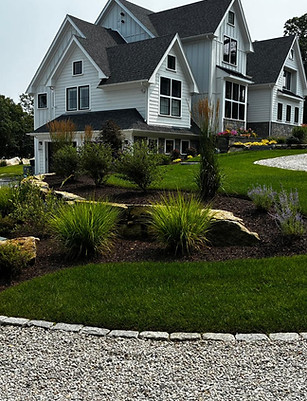
Selection and design work together. We decide where beds go, how they are shaped, how plants are layered within them, and how the planting fits the property as a whole before a single plant is ordered.
Bed placement affects drainage, maintenance, and how the property looks from the street. Beds that sit too close to the house trap moisture against siding. Beds cut at awkward angles into the lawn are hard to mow and edge. We position beds so they work with the grade and the natural lines of the property.
Within each bed, we layer plants by height and season. Taller plants in back, mid-height in the middle, low-growing plants and groundcovers at the edge.
Bloom times are spread across spring, summer, and fall so the bed has something going on through the season instead of peaking for three weeks and going flat.
Evergreens anchor the structure and keep the bed readable through winter.
We also design for mature size, not nursery size. A bed that looks full at installation but was not planned for growth becomes a problem in three years. Properly designed, it fills in on schedule without overcrowding.
Coastal Exposure
Fairhaven has 29.4 miles of coastline along Buzzards Bay, New Bedford Harbor, and the Acushnet River. Properties near the water deal with salt spray from storms, consistent wind, and sandy soil that drains quickly and loses nutrients fast.
Standard plant selections that work five miles inland often fail near the water. For these sites, coastal-tolerant natives like bayberry, rugosa rose, beach plum, inkberry holly, and switchgrass form the backbone of the planting. We build from there based on the specific level of exposure.
Front-of-House Planting
The most common foundation planting mistake is choosing shrubs based on how they look at the garden center rather than how large they grow. A compact-looking shrub planted tight against a house will eventually block windows, crowd the entryway, and require aggressive pruning every season just to stay manageable.
Many older in-town Fairhaven properties have foundation shrubs that were planted decades ago and have long since outgrown their space.
Replacing them with properly sized varieties and correct spacing produces results that do not require constant maintenance to sustain.
Front-of-house conditions also vary by exposure. The south side of a house gets intense afternoon heat. The north side stays shaded and damp. Roof overhangs reduce rainfall reaching beds directly against the foundation.
All of these factors affect what will actually perform well.
Spacing from the foundation is determined by the mature spread of the plant, not its size at installation.
According to guidelines published in the journal of the International Society of Arboriculture, placement from the house should be roughly half the plant's ultimate spread, with small shrubs at least 2 feet out, medium shrubs about 3 feet, and tall shrubs 4 to 5 feet from the foundation.
Planting too close is how shrubs end up requiring aggressive pruning every season just to keep them off the house, and constantly cutting plants back to fit a space they were never meant to fit ruins their natural form and causes long-term stress.
We calculate foundation clearance for every plant before it goes in based on documented mature dimensions, not guesswork.

.jpg)
Mulch Bed Layout and Shaping
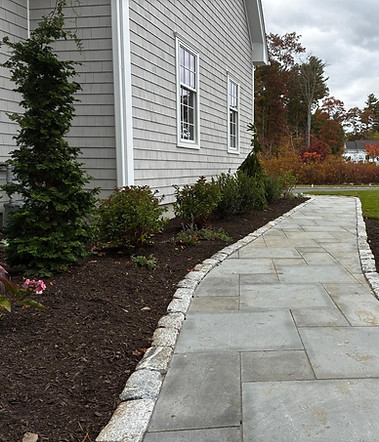
Bed layout determines how the landscape looks, how runoff moves across the property, and how easy the bed is to maintain. Beds that extend too close to the house trap moisture against siding. Beds that cut awkward angles into the lawn create areas that are hard to mow and edge. Fairhaven's stormwater regulations encourage plantings that help manage runoff, which means bed placement and grade matter beyond just appearance.
Bed shape should follow smooth, intentional curves rather than irregular lines. Beds should slope gently away from the house or toward permeable lawn areas. We plan layout and shaping as part of every site visit before plants are selected.
Raised Planting Beds
Raised beds work for a few different reasons. Some properties need them because the existing soil is too poor, rocky, or wet to support healthy plants. Others use them because they like the look. A gently mounded bed adds visual depth to a flat yard, makes plantings stand out, and gives the landscape a more intentional, finished appearance.
Raising a bed also improves drainage. Water sheds away from the root zone instead of pooling around plants after rain. On low-lying North Fairhaven properties where beds stay saturated longer than they should, this alone can be the difference between plants that establish and plants that rot out.
We build raised beds by bringing in quality loam, shaping the bed to the right depth and contour, and getting the soil ready before a single plant goes in. The loam gives roots what they need from day one instead of fighting against compacted fill or sandy subsoil that was never meant to grow anything.
Evergreen Shrubs
Evergreen shrubs provide year-round structure. In Massachusetts, where landscapes go dormant for months, this matters more than in warmer climates.
Without evergreens, a property loses all visual interest from late fall through early spring. The right selections for South Coast properties depend on exposure level, soil conditions, and available space at maturity.
Varieties suited to being placed near the foundation planting differ from larger screening evergreens appropriate along property lines, and coastal-exposed sites need more salt and wind-tolerant choices than sheltered inland beds.
Flowering Shrubs, Perennials, and Annual Flowers
Flowering shrubs add seasonal color and variety. The challenge is choosing varieties that stay in scale with the planting space over time. Bloom timing matters too. A landscape where all flowering shrubs peak in May goes quiet for the rest of the season. Spreading bloom times from spring through fall keeps the landscape interesting longer. For coastal properties, salt and wind tolerance narrow the field.
The Massachusetts Office of Coastal Zone Management specifically lists bayberry and beach plum as proven coastal shrubs for South Coast properties, and notes that bigleaf hydrangea is also salt-tolerant and useful for coastal foundation plantings.
Perennials return year after year and form the long-term structure of a planting bed. Most bloom during a defined window, so a well-planned perennial bed includes varieties that carry different parts of the season. Early bloomers like catmint carry spring, mid-season selections carry summer, and late-season plants like ornamental grasses and asters carry the bed into fall. We select varieties proven to perform in Zone 6b conditions, not marginally hardy species that may not return after a hard winter.
Annuals last one season but deliver consistent color from planting through frost. They are the right choice for container plantings, entryway beds, and any spot where you want strong visual impact every year. Most well-designed beds combine perennials for the long-term framework and annuals where seasonal color intensity makes sense.
Annuals last one season but deliver consistent color from planting through frost. They are the right choice for container plantings, entryway beds, and any spot where you want strong visual impact every year. Most well-designed beds combine perennials for the long-term framework and annuals where seasonal color intensity makes sense.
Ornamental Trees and Privacy Planting
Ornamental trees anchor planting beds, frame entryways, and provide focal points without the canopy spread and root zone of large shade trees. Tree placement has to account for mature size, not nursery size. A small tree planted near a walkway or foundation can look fine for years before roots lift pavement or branches crowd structures.
On coastal Fairhaven properties, tree selection also needs to account for salt and wind tolerance, particularly along Sconticut Neck, the harbor area, and West Island.
Privacy planting uses trees and shrubs to screen views and define property edges. Key decisions are selecting species that reach the needed height, spacing them for coverage without overcrowding, and choosing varieties that hold foliage through winter.
Arborvitae works well on many South Coast properties but can suffer from winter burn and salt spray damage in exposed coastal locations. We evaluate site conditions before recommending a screening species rather than defaulting to the same choice on every property.


Plant Installation
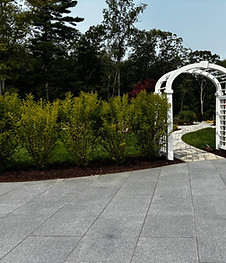
Correct installation is as important as correct plant selection. A well-chosen plant installed improperly will fail just as surely as the wrong plant in the wrong spot.
Planting Depth
Planting too deeply is a leading cause of plant failure. According to UMass Extension's planting guidelines, the planting hole should be no deeper than the height of the root ball as measured from the trunk flare to the bottom, and the trunk flare should sit one to two inches above finished grade. When the hole is dug too deep and the plant settles, the trunk flare ends up buried, water collects around the stem base, and rot develops gradually. By the time symptoms appear, the damage is usually irreversible.
UMass Extension notes that heavily amended planting holes can create conditions that encourage roots to remain in the amended zone rather than spreading into surrounding native soil, which limits long-term establishment and performance.
Watering
Watering starts before the plant even goes in the ground. On drier sites, we wet the hole before placing the root ball so the surrounding soil is not pulling moisture away from the roots the moment the plant lands. As we backfill, we water in stages, soaking the soil around the root ball layer by layer to eliminate air pockets and make sure the root zone has full contact with moist soil from the start. The first thorough watering is not just about hydration. It is about soil settling and root contact.
After installation, newly planted trees and shrubs need daily watering for the first two weeks. Not light sprinkling. Deep watering that soaks the root ball and the surrounding soil. Shallow watering produces shallow roots, and shallow roots struggle long-term, especially through a dry South Coast summer. Sandy coastal soils drain faster than inland loam and may need more frequent sessions to maintain consistent moisture in the root zone.
After the first two weeks, water deeply two to three times per week through the rest of the first season. The amount per session stays high even as the frequency drops. Deep, infrequent watering encourages roots to chase moisture downward, which builds drought tolerance for the years ahead. Hot, dry stretches in July and August require closer attention. Cool, wet periods require less. Automatic irrigation helps but still needs monitoring.
Establishment takes the full first growing season for most shrubs and perennials. Trees take longer, often one to three years depending on size and species. Plants that get consistent water during that window become self-sufficient. Plants that struggle through inadequate first-year watering develop weak root systems they never fully recover from. We provide watering guidelines with every installation so you know exactly what the plants need and when.
Plant Spacing and Bed Edging
Plants should be spaced for mature size, not immediate fullness. A bed planted for how it looks at installation is a bed that needs serious intervention within three to five years.
Foundation shrubs need clearance to reach mature spread without growing into windows or siding. Beds that are correctly spaced may look sparse for the first season or two, which is normal. We sometimes use annuals to fill visible gaps during the establishment period.
Clean bed edges separate planting areas from lawn, contain mulch, and prevent grass from creeping in. University of New Hampshire Extension recommends mulching at a depth of two to three inches, kept away from direct contact with stems and trunks. More than three inches can hold too much moisture against stems, restrict oxygen to roots, and prevent rainfall from reaching the root zone effectively.
Piling mulch against trunks, sometimes called volcano mulching, is a leading cause of decline in a wide range of landscape plants according to Rutgers University's New Jersey Agricultural Experiment Station.

Common Plant Selection and Installation Mistakes
Planting too deeply kills more plants than most other mistakes. When root ball tops end up below grade, water collects around stems and causes rot. Stems aren't meant to be buried. Even an inch or two too deep creates problems that show up as decline over the following seasons.
Spacing plants too close together looks good initially but creates overcrowding as plants mature. Three years later, everything is fighting for space, light, and nutrients.
Aggressive pruning to maintain size stresses plants and ruins their natural shape. Proper spacing from installation prevents this completely.
Not providing enough water during establishment causes plant stress that shows up as browning, wilting, or leaf drop. Plants that struggle through the first season never develop strong root systems. They remain weak and susceptible to stress, pests, and disease indefinitely.
Ignoring sun exposure requirements puts shade plants in full sun, where they scorch, or sun-loving plants in shade, where they get leggy and weak. No amount of care fixes plants in the wrong light conditions. They need to be moved to appropriate locations or replaced with suitable varieties.
Selecting plants that look good at garden centers but aren't hardy for Massachusetts wastes money. Tender perennials, marginally hardy shrubs, or varieties rated for warmer zones don't survive winters here. Professional selection uses proven varieties that handle local conditions.


Getting Started with Plant Selection and Installation
Properties throughout Fairhaven, Mattapoisett, Marion, Acushnet, Rochester, New Bedford, and Dartmouth need plant selection and installation that accounts for coastal conditions, Zone 6b climate, and local soil. Professional design and installation create landscapes that survive and thrive instead of requiring constant replacement.
Call 508-763-8000 or email request@newenglandtreeandlandscape.com. We'll schedule a site visit, assess conditions, design plant beds, select appropriate plants, and install everything properly. Whether it's new construction needing complete landscaping or existing property requiring plant bed renovation, professional plant selection and installation create lasting results.
35 years in business. Local crew based at 232 Huttleston Avenue in Fairhaven. Family-owned. We're the caring professionals.
FAQ's
What plants handle salt spray and wind better near the coast?
Coastal areas require salt-tolerant and wind-resistant plants that can handle harsh exposure. Options like beach grass, switchgrass, and rugosa rose perform well because they resist drying and salt damage. Standard landscape plants usually fail quickly in these conditions.
How do professionals select the right plants for a specific yard?
The right plants are chosen based on sun exposure, soil type, drainage, space, and how the yard is used. In Massachusetts, plant selection also accounts for winter hardiness, moisture levels, and how plants will perform long-term, not just how they look at installation.
Should plants be installed before or after hardscaping?
Plants should almost always be installed after hardscaping. Hardscaping sets final grades, drainage, and elevations, which determine where plants can survive. Installing plants first often leads to damage or rework once patios, walkways, or walls are built.
What kind of watering do new plants need after installation?
Newly installed plants need consistent watering during the establishment period. Trees and shrubs typically require deep watering several times per week at first, tapering as roots establish. Proper watering is critical during the first growing season in Massachusetts, especially during summer heat.
When is the best time to install plants in Massachusetts?
Spring and fall are the best times to install plants in Massachusetts because temperatures are moderate and moisture is more consistent. Summer planting is possible with proper watering, but extreme heat increases stress on new plants.
Why do plants in the same bed keep dying while others nearby are doing fine?
Conditions can change even a few feet apart. One area may hold water, stay dry, get more sun, or have different soil. If the plant doesn’t match that exact spot, it will keep failing.
Can plants die just because they were planted too deep?
Planting depth is critical. When the root ball sits below grade, water collects around the stem and leads to rot. Even a small depth error can cause long-term decline.
Are native plants actually lower maintenance, or is that overstated?
Native plants are adapted to local conditions, which makes them more reliable. They typically require less watering and handle weather shifts better than non-adapted species. They are not maintenance-free, but they reduce long-term effort.
How do you know whether a bed is full sun, part shade, or full shade?
Full sun means at least 6 hours of direct sunlight, part shade is 3 to 6 hours, and full shade is less than 3. The only reliable way to know is by tracking sunlight throughout the day. Guessing leads to planting the wrong species and early failure.
How far should a tree be planted from a house in Massachusetts?
Tree spacing depends on the mature size of the tree. Small ornamental trees are usually planted 10 to 15 feet from a house, while larger shade trees often need 20 to 30 feet or more. Proper spacing prevents future issues with roots, branches, and foundations.