

Property Landscape Planning in Fairhaven, MA
Call 508-763-8000 for a free estimate and get a plan that prevents drainage issues, grading mistakes, and costly rework.
We design complete landscape plans that account for drainage, grading, soil conditions, and installation order before any work begins. This ensures patios, planting areas, and lawns are built on a solid, properly planned foundation.
Most landscape projects fail because water flow, sun exposure, and runoff are ignored early. We address those problems upfront so your project is done right the first time, not fixed later.
Serving Fairhaven and the South Coast.
Email request@newenglandtreeandlandscape.com to get started.
Outdoor Space Planning & Landscape Plans
Most landscape jobs fail because nobody planned them properly. Contractor shows up, starts digging, realizes drainage is a problem, then tries to fix it after hardscaping is already in. Plants go in without anyone checking the sun exposure, and they die after one season. Or a patio gets built without considering how water runs off the roof during storms.
Landscape design plans solve this by figuring everything out before work starts. We look at your property's current condition, identify what needs fixing, and create a plan that addresses drainage, grading, plant placement, hardscaping, irrigation, and lawn installation in the right order. Sometimes we use CAD drawings for complex projects. Other times, a detailed site plan with measurements and notes works fine. Either way, you get a blueprint showing what goes where and why.
Properties in Fairhaven, Dartmouth and Acushnet deal with coastal conditions, sandy soil, and water issues that generic landscaping can't handle. A good landscape design plan accounts for these before crews show up with equipment. Saves time, prevents expensive mistakes, and makes sure everything gets installed correctly the first time.
Landscape Design Blueprints
A landscape design blueprint is what separates a project that goes smoothly from one that has to be partially torn out and redone. Without a documented plan, decisions get made in the field by whoever is on site that day. Grading gets skipped because nobody wrote down the elevation targets. Irrigation lines get forgotten until after the patio is poured. Plants go in wherever they fit rather than where the sun exposure and mature size actually work. The blueprint is what prevents all of that.
We produce landscape design plans scaled to your property and detailed enough to guide every phase of installation. For complex projects, we use CAD drawings that show exact dimensions, elevations, grading targets, and drainage layouts. For smaller or more straightforward work, a detailed site plan with measurements, notes, and a clear installation sequence accomplishes the same thing. Either way, you have a document that shows what goes where, in what order, and why, before any work begins.
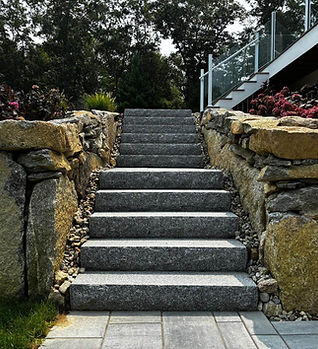
Plans cover every phase of the project. Grading and drainage get documented first because they determine everything that gets built on top of them. Hardscaping layouts show exact placement, dimensions, and material specifications for patios, walkways, retaining walls, and steps. Planting plans map each bed with plant species, quantities, spacing, and placement based on sun exposure and mature size. Lawn areas are identified after all other features are mapped. Lighting and irrigation routes are documented before surfaces are installed so wiring and lines do not require digging up finished work later.
For properties in Fairhaven, Marion, Mattapoisett, and the surrounding South Coast towns, the blueprint also accounts for local conditions that affect how a landscape gets built: coastal soil types, freeze-thaw cycles, salt air exposure near the water, and any Conservation Commission requirements that apply to the property. A plan built around those specifics holds up. A generic plan does not.
Patio Design Planning
A patio project that fails usually fails before the first paver goes down. The contractor skips the grading conversation, assumes the yard drains well enough, and builds the surface on whatever ground exists. Two winters later, the patio is heaving, water is pooling against the foundation, and the homeowner is calling someone to tear it out and start over.
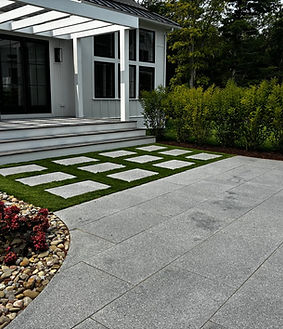
Patio design planning prevents that. Before we lay out any patio on a Fairhaven property, we evaluate the existing grade, map where water moves during a heavy storm, and figure out where it needs to go once the patio surface is in place. A patio that sheds water correctly is not an accident. It is the result of planning slope, drainage, and base preparation before any material gets ordered.
We plan patio size and shape around how you actually use the space. A patio that fits a grill, a table, and six chairs needs more square footage than most homeowners expect when they eyeball it in the yard. We map the layout against the house, the yard, and any features being added alongside it, like a seating wall, fire pit, or walkway connection, so everything fits and functions as one cohesive outdoor space rather than a collection of separate additions.
Material selection gets worked into the plan early because it affects base depth, drainage slope, and budget. Many customers choose between stone patios or paver patios
Concrete pavers, bluestone, flagstone, and granite all behave differently and suit different property types. South Coast properties near the water deal with salt air and aggressive freeze-thaw cycles that rule out certain materials or installation methods. We make those recommendations based on your specific site, not a catalog.
Walkway Design Planning
Most walkway problems trace back to the same root cause: nobody planned the route, the grade transition, or the base before installation started. A path gets laid across the yard without accounting for where the slope changes, how water drains off the surface, or how the walkway connects to the driveway, steps, and patio. It looks fine at first. Then the freeze-thaw cycle does its work, and sections start heaving, edges break down, and low spots collect water that accelerates the damage underneath.
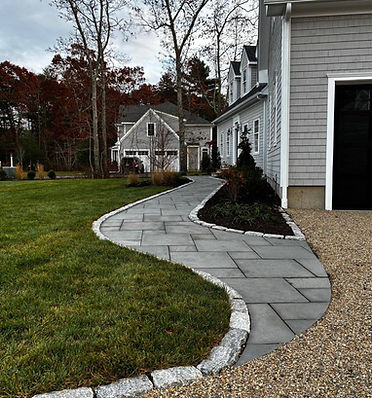
Walkway design planning maps the entire route before any excavation begins. We look at how the path connects the driveway or street to the front entry, how it transitions between elevations, where steps need to be integrated, and how water will drain off the surface across every section of the run. Properties in Fairhaven and Acushnet are rarely flat, and a walkway that crosses a grade change without properly planned steps or transitions becomes a trip hazard and a drainage problem at the same time.
Width is part of the plan, too. A front walkway that is too narrow feels undersized against the house and forces visitors to walk single file. We size walkways based on the scale of the home, the traffic they will see, and whether the path needs to accommodate two people walking side by side, which most front entries do.
Material selection is decided during planning; many homeowners choose between stone walkways and paver walkways.
Bluestone suits a cleaner, more formal entry. Flagstone works better in naturalistic settings with heavy planting.
Pavers offer the widest range of patterns and color options. We match the walkway material to the house, the patio if one exists, and the overall landscape plan so the finished property reads as one connected design rather than separate projects installed at different times.
What Landscape Plans Include
Our landscape design plans map out every phase of your project from start to finish. Plans show what needs doing, in what order, and why each step matters. This prevents crews from starting work, then realizing critical steps got skipped.
Site preparation plans identify what needs clearing before installation starts. Brush areas, overgrown vegetation, unwanted trees, and obstacles blocking equipment access. Plans show what stays, what goes, and where material gets hauled. Properties near wooded areas or older Fairhaven homes often have years of overgrowth hiding drainage problems. Clearing plans reveal what you're actually working with before installation begins.
Excavation and grading plans show how we reshape the property, so water flows correctly. We measure existing elevations, identify where water pools or runs toward buildings, and design new grades that fix drainage. Plans specify how much fill needs to be brought in to raise low areas and where we cut down high spots. They show slope percentages so you know water will actually drain instead of sitting there. New construction sites almost always need major grading work because builders don't prepare land for landscaping.
Erosion control services and yard drainage solutions show where water goes and how it gets there: catch basins, pipes, French drains, swales. Plans include sizing and grades, so the system works when installed. A 1000 square foot roof dumps over 600 gallons during one inch of rain. That water needs somewhere to go that won't cause flooding or erosion.


Hardscaping layout plans show exact locations, dimensions, and materials for patios, walkways, retaining walls, and steps. We include base preparation specs and material quantities. Patio plans show size, shape, material selection, and proper slope so water drains off instead of pooling. Walkway plans map routes and specify base depth, so they don't heave during winter. Retaining wall plans show height, length, material type, and which walls need engineering stamps for permits.
Loaming plans specify how much quality topsoil your property needs and where it goes. We calculate loam quantities for lawn areas, planting beds, and around hardscaping. Plans show depths: 4 to 6 inches for lawns, more for planting beds. Most Fairhaven properties have terrible soil, either clay that holds water or sandy fill that won't hold nutrients. Loaming plans show where quality screened loam gets spread to create an actual growing medium.
Planting plans show what plants go where based on sun exposure, soil conditions, and mature size. Plans include plant lists with quantities, sizes, and spacing based on how big plants grow.
Lawn installation plans show which areas get grass and what method works best: seeding, hydroseeding, or sod. Plans identify lawn areas after hardscaping and planting beds are mapped. Grass goes around everything else. We specify the installation method based on area size, slope, timeline, and budget.
Lighting plans show fixture locations and wiring routes for low-voltage LED systems. Plans map where lines run underground before patios and planting beds get installed. Prevents digging up finished work later to add forgotten lighting.
Common Mistakes Without Landscape Design Plans
Most landscape failures happen because work started without proper planning.
People think they're saving money by skipping design plans, then end up paying more to fix problems that planning would have prevented.
Starting hardscaping before grading gets fixed is one of the biggest mistakes we see. Someone builds a beautiful patio on poorly graded land. Water pools against the foundation during the first rain. Now the patio needs to be torn out, the property needs to be regraded, and the patio gets rebuilt. Cost doubles or triples compared to planning grade correctly from the start.
Installing plants without checking sun exposure kills plants fast. Shade plants go in full sunspots because they look good at the garden center. They struggle for a season, then die. Replacement plants cost money, but the real cost is waiting another year or two for new plants to fill in while staring at dead spots.

Building retaining walls without drainage causes wall failure within a few years. Water pressure builds up behind walls with no way to escape. Walls lean, crack, or collapse completely. Rebuilding failed walls costs way more than planning proper drainage during initial construction.
Forgetting to plan irrigation before installing patios and walkways means digging up finished hardscaping to add water lines later. Destroys the work you just paid for. Planning irrigation routing during the design phase prevents this completely.
Installing the lawn in the wrong sequence wastes money and time. Grass goes in before hardscaping or planting beds are done. Then the equipment tears up the new lawn, installing forgotten features. The lawn needs complete replacement.
Plans show the correct installation sequence, so nothing gets torn up and redone.
Not accounting for mature plant size creates problems years later. Plants are spaced for their current size, not how big they grow. Three years later, shrubs block windows, crowd walkways, and fight each other for space. Major pruning or removal becomes necessary. Plan space plants based on mature size, preventing overcrowding problems.
Backyard Design Planning
The backyard is where most landscape planning falls apart. Front yards get attention because they face the street. Backyards get whatever is left over after the front is done, which usually means no real plan, no drainage solution, and a collection of features that were added one at a time without any thought for how they fit together. The result is a yard that feels incomplete regardless of how much has been spent on it.
Backyard design planning treats the entire rear of the property as one system. We start by evaluating the existing grade, identifying drainage problems, and mapping how water moves across the yard during a storm. Backyards on South Coast properties collect runoff from the house, the roof, neighboring lots, and any slope above them. That water needs somewhere to go that does not involve pooling against the foundation or sitting in the middle of the lawn for days after a storm. We solve those problems in the plan before any installation begins.
From there, the design organizes every element of the backyard around how you want to use the space. Patio placement, lawn area, planting beds, privacy screening, lighting, and access paths all get mapped relative to each other and relative to the house. We look at sun exposure throughout the day, views you want to preserve or block, and how the yard connects to indoor living spaces. A sliding door that opens onto a poorly placed patio, or a lawn that is completely shaded by the time anyone is home to use it, are planning failures that a proper design prevents.
Fairhaven backyards often come with specific challenges: slopes that make usable flat space scarce, sandy or clay-heavy soil that does not support healthy lawns without amendment, and proximity to water that affects material selection and plant choices. The design accounts for all of it before a crew shows up with equipment.

Our Process for Creating Landscape Design Plans
Every project starts with a site visit. We look at the property, discuss goals and budget, identify challenges, and take measurements. Then we create landscape design plans showing layout, plant placement, hardscaping, drainage, and irrigation.
Plans show project phases, so you understand the installation sequence. Site prep and clearing happen first. Then excavation and grading. Drainage systems get installed before hardscaping. Hardscaping gets built before loaming. Planting and mulching happen after loaming. Lawn installation comes near the end. Lighting gets added last. Each phase builds on previous work.
Once you approve plans, we schedule installation. Timeline depends on project size. Small residential jobs might take a few days. Large commercial projects run for several weeks. We communicate the schedule upfront so there's no confusion about when crews show up.
After installation, maintenance plans keep everything healthy. Most clients stay with us for ongoing maintenance because we already know their property and what it needs. Plans outline exactly what maintenance happens throughout the year.
Getting Started with Landscape Design Plans in Fairhaven
Properties in Marion, Mattapoisett, New Bedford and surrounding areas need landscape design plans that work with coastal conditions, not against them. Whether you're starting from bare dirt on new construction site, fixing drainage problems on existing property, or upgrading commercial landscaping, process starts with planning.
Call 508-763-8000 or email request@newenglandtreeandlandscape.com. We'll schedule site visit, look at what you're working with, and create landscape design plans that fit your property and budget. Plans show everything that needs doing based on your property's current condition and needs.
35 years in business. Local crew based at 232 Huttleston Avenue in Fairhaven. Family-owned. We're the caring professionals.
FAQ's
What is typically included in a landscape design plan?
A landscape design plan typically includes a scaled layout of the property showing plant placement, tree locations, lawn areas, hardscaping, grading considerations, and drainage flow. In Fairhaven and nearby towns, good plans also account for sun exposure, soil conditions, and how the landscape will mature over time, not just how it looks on day one.
Can a landscape design plan help homeowners in Fairhaven avoid costly mistakes later?
Yes. A design plan helps avoid common mistakes like poor drainage, overcrowded plants, improper tree placement, or installing features at the wrong elevation. On the South Coast, where moisture and freeze-thaw cycles are constant, planning these details upfront prevents expensive rework after installation.
Do landscape designers determine proper tree placement for Massachusetts landscapes?
Yes. Landscape designers plan tree placement based on mature size, sun and shade patterns, proximity to structures, and long-term impact on the property. In Massachusetts, this also includes accounting for wind exposure, coastal conditions, and winter performance so trees remain healthy and don’t create future issues.
Can a landscape design plan handle sloped or uneven yards?
Yes. A proper landscape design accounts for slopes and uneven ground through intentional grading, drainage planning, and retaining structures when needed. On the South Coast, this prevents erosion, standing water, and long-term movement of patios, walls, and walkways caused by unstable terrain.
Can a landscape design plan help navigate local permitting or conservation requirements in Massachusetts?
Yes. A well-prepared design plan can identify areas affected by zoning, wetlands, or conservation buffers early in the process. In towns like Fairhaven, this helps homeowners understand limitations, prepare for Conservation Commission review if needed, and avoid starting work that could lead to delays or violations.
We want to redo the whole yard. Where do we even start?
You start with the current condition of the property, not the features you want to add. We evaluate grading, drainage, soil, and layout first, then build the design around that. If you skip that step, everything you install sits on a bad foundation.
Do I need CAD drawings, a survey, or builder plans before you can make a plan?
Not always. For more complex projects, CAD drawings and surveys help with accuracy, but many projects can be planned with detailed site measurements. We use the level of detail the project actually requires.
Do we need permits or Conservation Commission approval for any of this?
Sometimes, depending on the scope and proximity to wetlands or protected areas. We identify that early so you’re not starting work that gets flagged later. It’s part of planning the job correctly from the start.
Do I really need a landscape plan before we start doing anything?
You can start without one, but that’s how projects end up getting redone. Most failures we fix started with work done out of sequence or without addressing drainage first. A plan makes sure everything is built in the right order so you don’t pay twice.