
Tree and Shrub Care Services in Fairhaven, MA
When trees, shrubs, and hedges go too long without proper care, the whole landscape starts to look overgrown. Branches creep closer to structures, shrubs block windows and walkways, and hedges lose the clean shape that keeps planting beds looking maintained.
New England Tree & Landscape provides professional tree and shrub care based on plant species, structure, and proper seasonal timing. We prune trees for health and safety, cut back overgrown shrubs, and trim hedges so the entire landscape stays balanced and well maintained.
Call 508-763-8000 or email request@newenglandtreeandlandscape.com to request a free estimate.
About Tree and Shrub Care Services
Trees and shrubs need regular pruning and care to stay healthy and look maintained. Overgrown shrubs block windows and walkways. Dead branches create hazards and spread disease. Trees growing into houses or power lines cause damage and safety problems.
Professional tree and shrub care includes pruning for health and appearance, removing dead or damaged growth, treating disease and pests, and managing overgrown plants. We prune at the correct times for each plant type, so flowering isn't affected, and plants stay healthy. Properties in Fairhaven, Mattapoisett, Acushnet, Rochester, Marion, New Bedford, and Dartmouth need regular tree and shrub care to maintain landscapes properly.
Regular pruning keeps plants shaped correctly, prevents overgrowth problems, and maintains plant health. Skipping maintenance for years creates overgrown messes that require major work to restore decent appearance.


Tree Pruning
We remove dead branches that create falling hazards and spread disease to healthy parts of trees. Dead wood breaks unpredictably and threatens property or people below. Removing it eliminates these risks and improves tree appearance.
Pruning for clearance keeps trees from growing into houses, roofs, or power lines.
Shaping trees improves appearance and balances growth. Trees develop better structure when pruned correctly. Crowded interior branches get thinned to improve air circulation and light penetration. This reduces disease and improves overall tree health.
Crown raising removes lower branches to provide clearance under trees. This creates space for walking, mowing, or vehicle passage. Properties need adequate clearance under trees for the functional use of spaces.
Winter is the best time for most tree pruning. Trees are dormant, disease risk is reduced, and visibility is better without leaves. Winter pruning heals well when spring growth starts. We prune most trees during the dormant season unless dead or dangerous branches need immediate removal.
Spring pruning promotes quick healing and growth but increases disease risk during the active growing season. Fall pruning allows clear visibility once leaves drop, but major cuts before freezing weather can damage trees. We avoid heavy fall pruning on most trees.
Shrub Pruning and Trimming
Shrub pruning and trimming maintain shape, control size, and keep shrubs looking neat.
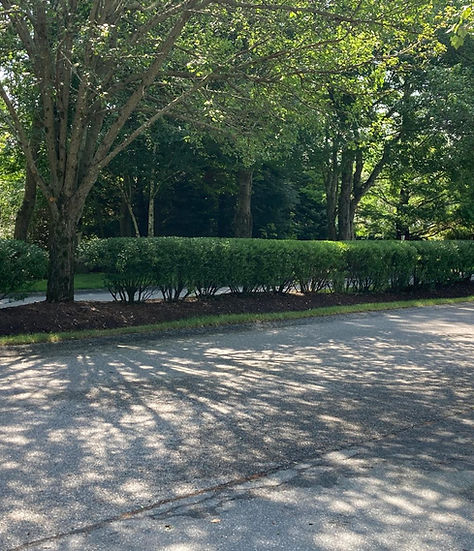
Trimming for shape keeps shrubs looking neat and maintained. Formal hedges need regular shearing to maintain clean lines. Informal shrubs get selective pruning that maintains natural form while controlling size. We match pruning style to plant type and landscape design.
Size control prevents shrubs from outgrowing their spaces.
Thinning overcrowded shrubs improves health and appearance. Dense growth prevents air circulation and light penetration, creating conditions for disease. Thinning opens up shrubs while maintaining natural shape. This works better than shearing for many shrub types.
Rejuvenation pruning restores overgrown shrubs that haven't been maintained in years. Severe cutting back stimulates new growth from the base. This takes multiple years but restores shrubs to a manageable size. Some shrubs respond well to rejuvenation, while others need complete replacement.
Deadheading removes spent flowers to improve the appearance and sometimes promote additional blooming. This cosmetic pruning keeps shrubs looking good through the growing season. We deadhead when it benefits appearance or plant health.

Pruning Timing by Plant Type
Pruning timing by plant type prevents removing flower buds and ensures plants bloom properly. Wrong-time pruning reduces or eliminates flowering for the entire season.
Spring-flowering shrubs bloom on the previous year's growth. They set flower buds during the summer for next spring's flowers. We prune these immediately after flowering ends in late spring or early summer. Pruning in fall or early spring removes flower buds and eliminates that season's blooms. Lilacs, forsythia, and rhododendrons are common spring bloomers that need post-bloom pruning.
Summer-flowering shrubs bloom on current season's growth. They develop flowers on new wood that grows in spring. We prune these in late winter or early spring before growth starts. This doesn't affect flowering because blooms form on wood that grows after pruning. Rose of Sharon, butterfly bush, and hydrangeas are summer bloomers pruned in early spring.
Evergreen shrubs can be pruned when needed, but avoid late fall pruning that stimulates growth before winter. New growth doesn't harden off before freezing weather and gets damaged. Early summer pruning after spring growth hardens off works well for most evergreens.
Trees get pruned during dormancy mostly. Winter pruning, when trees are leafless, allows a clear view of the branch structure. Disease risk drops during dormancy.
Pruning heals well when spring growth starts. We prune most trees in winter unless dead or dangerous branches need immediate attention.
Disease and Pest Treatment
Disease and pest treatment protects trees and shrubs from problems that damage or kill plants. Early detection and treatment prevent minor issues from becoming major damage.
We identify disease and pest problems during regular maintenance or when called for specific issues. Some problems show obvious symptoms. Others require experience to diagnose correctly. Proper identification ensures correct treatment.
Insect treatments control pests that damage foliage, weaken plants, or spread disease. We spray or inject treatments depending on pest type and infestation severity. Timing applications correctly improves effectiveness and reduces unnecessary treatments.
Disease treatments address fungal, bacterial, or viral problems affecting trees and shrubs.
Fungicide applications prevent or control fungal diseases. Bacterial and viral diseases often require removing infected parts since chemical treatment doesn't work well.
Preventive care reduces disease and pest problems. Proper pruning improves air circulation and light penetration, reducing fungal disease. Removing dead wood eliminates disease habitat. Maintaining plant health through appropriate care makes plants more resistant to problems.
Some problems require removing affected plants. Severely diseased trees or shrubs that threaten other plants need removal before the disease spreads. Treatment doesn't make sense when removal and replacement costs less than ongoing treatment attempts.

Tree and Shrub Health
Tree and shrub health depends on proper care, adequate water, appropriate pruning, and managing stress factors. Healthy plants resist disease and pests better than stressed plants.
Pruning promotes health by removing dead wood, improving structure, and increasing air circulation. Dead branches harbor disease and pests. Poor structure creates weak points that fail during storms. Dense growth without adequate air movement promotes fungal problems.
Watering during drought prevents stress that weakens plants. Deep watering during dry periods maintains health and reduces pest and disease susceptibility.
Monitoring for problems catches issues early when treatment works best. Regular inspection during maintenance identifies disease, pest, or structural problems before they become severe. Early intervention saves plants that would die without timely treatment.
Overgrown Plant Management
Foundation plantings that block windows need a significant cutback or removal. Shrubs planted too close to houses grow into windows, siding, and gutters. Regular maintenance prevents this, but neglected plantings require major renovation or replacement.
Shrubs encroaching on walkways create clearance problems and look sloppy. These need pruning back to restore adequate passage width. Properties with narrow walkways can't afford shrubs growing into paths.
Trees with branches over roofs drop debris, create roof damage during storms, and provide access for pests to enter buildings. We prune branches back to safe clearance that protects structures without removing more tree than necessary.
Hedges grown too tall or wide need major renovation. Selective pruning over multiple seasons gradually reduces size while maintaining some screening. Severe cutback stimulates new growth but leaves gaps temporarily. Complete removal and replacement with appropriately sized plants is sometimes a better solution.
Overgrown plants from years of neglect require a realistic assessment. Some plants restore to decent condition with proper pruning. Others are too far gone and need replacing. We evaluate what's worth saving versus what needs removal.
Arborvitae Trimming
Arborvitae hedges require regular trimming to maintain shape, density, and privacy screening. Without maintenance, arborvitae quickly become tall, thin, and uneven, leaving gaps that are difficult to correct later.
Proper arborvitae trimming focuses on controlling height, maintaining width, and keeping the hedge dense from top to bottom. We trim arborvitae lightly and regularly rather than making severe cuts that expose bare interior wood. Unlike many shrubs, arborvitae do not regenerate well from deep cuts into old wood, so correct trimming technique is important.
Maintaining a slightly narrower top and wider base allows sunlight to reach lower branches. When arborvitae are trimmed flat on top with straight vertical sides, the lower branches become shaded and begin to thin out. Proper shaping prevents this problem and keeps the hedge full.
Arborvitae trimming is typically done in late spring or early summer once the new growth begins to harden off. Light touch-up trimming may also be done during the growing season to maintain appearance.
Properties throughout Fairhaven, Mattapoisett, Acushnet, Rochester, Marion, New Bedford, and Dartmouth commonly use arborvitae for privacy screening along property lines, driveways, and pool areas. Regular trimming keeps these hedges dense, healthy, and functioning as intended.
Removal of Dead or Damaged Growth
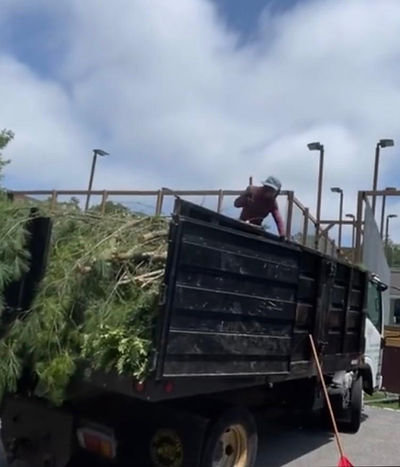
Dead branches break unpredictably, creating falling hazards. Wind storms, ice, or decay cause failure without warning. Removing dead wood eliminates these risks before branches fall on people, vehicles, or structures.
Disease spreads from dead wood to healthy parts of plants. Fungi and bacteria colonize dead tissue then invade living wood. Removing dead branches stops disease progression and improves plant health.
Storm damage needs prompt attention. Broken branches, torn bark, or split trunks require proper pruning to promote healing. Leaving damaged growth creates entry points for disease and slows plant recovery.
We remove dead and damaged growth year-round as needed. This isn't seasonal work that waits for specific times. Hazards get addressed when identified. Waiting for convenient timing risks property damage or injury.
Small dead branches get removed during regular pruning. Large dead limbs might require equipment or specialized techniques. We handle routine removal as part of regular care.
What We Don't Do
We don't do large tree removal anymore. Trees requiring climbing or extensive rigging need specialized tree services. We handle pruning and care for trees we can reach with equipment, but don't take on major removals.
Tree climbing isn't part of our current services. Work requiring climbing gets referred to tree services equipped for that work. We focus on ground-based tree care that doesn't need climbing access.
Stump grinding isn't a service we provide. However, we can pull many stumps out with an excavator, depending on stump size. This works well for stumps from trees we've removed, or property owners need to be gone. Large stumps need professional grinding services.
Our tree and shrub care focuses on maintenance pruning, health care, and managing plants for appearance and function. Specialized tree work gets handled by services equipped specifically for those tasks.
Getting Started with Tree and Shrub Care
Properties throughout Fairhaven, Acushnet, Rochester, Mattapoisett, Marion, New Bedford, and Dartmouth need regular tree and shrub care to maintain plant health and appearance. Professional pruning at the correct times keeps plants looking right and prevents problems.
Call 508-763-8000 or email request@newenglandtreeandlandscape.com. We'll schedule tree and shrub care that maintains your plants properly. Whether it's regular seasonal pruning, addressing overgrown plants, or treating disease and pest problems, professional care keeps trees and shrubs healthy and attractive.
35 years in business. Local crew based at 232 Huttleston Avenue in Fairhaven. Family-owned. We're the caring professionals serving the South Coast with tree and shrub care done right.
FAQ's
When is the ideal time to prune most trees and shrubs in Fairhaven, MA?
Late winter to early spring is best for most trees when they're dormant and wounds heal quickly once spring growth starts. Spring-flowering shrubs like forsythia and lilac should be pruned right after blooming ends. In Fairhaven and nearby coastal towns, winter pruning also helps prepare trees for nor'easter season.
Can I prune trees and shrubs during the Massachusetts summer?
Yes, but summer pruning should be limited to minor corrections, deadwood removal, and light shaping rather than major structural work. Summer allows you to see the tree's full shape with leaves and easily identify dead branches. Properties in Fairhaven and surrounding South Coast towns benefit from summer deadwood removal before hurricane season.
Can I remove dead or diseased branches any time of year?
Yes. Dead, diseased, or hazardous branches should be removed when identified regardless of season. Waiting for ideal pruning timing risks further damage, disease spread, or safety issues. Whether in Fairhaven, New Bedford, or Dartmouth, removing problem branches promptly protects both the plant and your property.
Can shrubs planted too close to my house cause damage?
Yes. Overgrown shrubs retain moisture against siding, which deteriorates exterior materials and creates mold conditions. Roots can also dry out foundation soil or damage water and sewer lines over time. Coastal properties in Fairhaven and Mattapoisett are especially vulnerable because consistent humidity accelerates these moisture-related problems.
What steps prevent road salt damage to trees in Fairhaven?
Place burlap screens between trees and salted areas, use alternatives like sand on your property, and flush soil with water in spring to remove accumulated salt. Consider planting salt-tolerant species in high-exposure areas.
Why do some flowering shrubs need to be pruned right after they bloom instead of in winter?
Some shrubs bloom on old wood, meaning they set buds the year before. If you prune them in winter, you remove those buds and lose the flowers. Pruning right after they bloom preserves next season’s growth.
If arborvitae get too tall or too wide, can they be cut back hard without leaving bare spots?
Not always. Arborvitae don’t regrow well from old wood, so cutting too far back can leave permanent bare areas. Proper, gradual trimming is what keeps them full.
What’s the difference between hedge trimming and selective shrub pruning?
Hedge trimming cuts everything evenly for shape. Selective pruning removes specific branches to improve structure and plant health. One is cosmetic, the other is corrective.