

Lawn Slice Seeding Services in Fairhaven, MA
If your lawn is thin or patchy and overseeding hasn’t worked, the problem is usually simple: the seed never actually reached the soil. When seed sits on top of grass or thatch, most of it dries out, blows away, or gets eaten before it ever has a chance to grow.
New England Tree & Landscape provides professional slice seeding across Fairhaven and the South Coast. Slice seeding cuts narrow grooves into the soil and places seed directly into them so it makes proper soil contact and establishes far more reliably than traditional overseeding.
Call 508-763-8000 or email request@newenglandtreeandlandscape.com to request a free estimate.
What Is Slice Seeding?
Slice seeding is a method used to repair and thicken lawns by cutting small grooves into the soil and placing grass seed directly into those slits. Instead of spreading seed on top of the lawn like traditional overseeding, it puts the seed where it actually has a chance to grow.
One of the biggest factors in getting grass to grow is seed-to-soil contact. UMass Extension emphasizes that seed needs direct contact with the soil to properly germinate and establish. When seed sits on top of grass or thatch, much of it never takes root.'
With slice seeding, the seed is placed slightly below the surface, where it stays protected and has better access to moisture. This leads to more consistent growth and a thicker, more even lawn.
This method is best for lawns that are thin, patchy, or not responding well to regular overseeding, especially when you need reliable results across the entire yard.
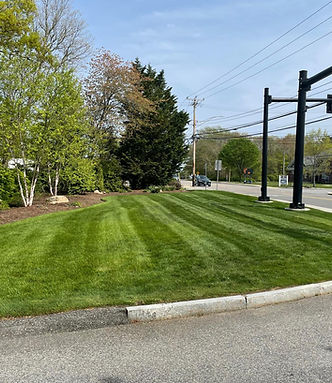
How Does a Slice Seeder Work?
A slice seeder uses rotating steel blades to cut narrow grooves directly into the soil, typically about a quarter to half an inch deep, while dropping grass seed into those slits. This places the seed below the surface instead of leaving it sitting on top of thatch or debris where it often fails to grow.
The reason this works comes down to one thing: seed-to-soil contact. Research from UMass Extension consistently emphasizes that successful lawn establishment depends on getting seed into direct contact with the soil. When seed sits on the surface, germination drops because it dries out, gets washed away, or never establishes properly.
By placing seed directly into the soil, slice seeding removes that uncertainty and creates consistent conditions for germination. Instead of relying on chance like broadcast seeding, it produces more reliable establishment, faster fill-in, and thicker turf.
This is why slice seeding is typically used on thin, patchy, or failing lawns where traditional overseeding has already underperformed.
Slice Seeding vs Overseeding
Broadcast overseeding spreads seed across the surface of an existing lawn using a drop or broadcast spreader. The problem is most of that seed never reaches the soil. It sits on top of dead grass, leaves, and thatch where it can dry out, wash away, or get eaten before it ever establishes.
Research from UMass Extension consistently emphasizes that seed-to-soil contact is the most important factor for successful germination and establishment. When seed is not in direct contact with the soil, establishment rates drop significantly regardless of how much seed is applied.
Core aeration before overseeding improves results by creating holes where some seed can reach the soil, but it still relies on chance.
Slice seeding removes that variable entirely by cutting grooves into the soil and placing seed directly into them.
The difference is control. Overseeding relies on gravity and partial contact, while slice seeding ensures consistent placement, which leads to faster establishment, more uniform growth, and a thicker lawn overall.


When Slice Seeding Works Best
Slice seeding works best when lawns have significant damage with bare spots, thinning areas, or large patches of dead grass.
If less than 50-70% of your lawn is healthy, slice seeding produces better results than overseeding.
The method is ideal when you want to introduce new grass varieties better suited to local conditions. Properties dealing with coastal salt exposure, sandy soil, or heavy shade benefit from slice seeding new varieties.
Slice seeding is more aggressive than overseeding. The blades cut into existing grass, potentially damaging healthy turf.
This is best reserved for lawns that genuinely need renovation rather than routine maintenance. For lawns that are 70% or more healthy and just need thickening up each fall, overseeding with aeration is the smarter, less disruptive choice.
Slice seeding should not be used for routine annual maintenance on lawns already in good shape.
Benefits of Slice Seeding
Germination rates up to 90% mean you see results faster with less wasted seed. When most of your grass seed actually sprouts and grows, you need less product overall. Seeds stay in place during heavy rain instead of washing away.
No need to spread straw or mulch over newly seeded areas. The method works well on slight slopes where broadcast seed would roll downhill. Slits hold seed in place even on inclines. Properties around Mattapoisett and Fairhaven with grade changes for drainage benefit from this. Slice seeding addresses thatch buildup while seeding.
The blades tear through accumulated thatch as they work, partially dethatching lawns that have thick layers from years of mowing without maintenance. Seeds placed at proper depth access moisture better than surface-applied seed.
This matters on sandy coastal soils that dry out quickly. Properties near the coast in Mattapoisett Center and Sconticut Neck have sandy soil that drains fast, making deep seed placement important.
Less expensive and invasive than laying sod. Slice seeding typically costs $0.08 to $0.18 per square foot compared to sod installation which runs much higher. Creates dense even growth that naturally suppresses weeds. Thick turf from successful slice seeding crowds out weed germination.


Limitations of Slice Seeding
The method costs more than standard overseeding because it requires specialized equipment.
Machines are expensive to buy and maintain, so most homeowners hire professionals rather than attempting it themselves.
Blades cut existing grass as they work. If your lawn is 70% healthy and you just want to thicken it up, slice seeding might damage too much of your good grass.
The process works poorly on extremely compacted soil. Blades can only penetrate so deep. If soil is rock-hard from years of compaction, you may need to aerate first before slice seeding will be effective.
Not effective if lawns have heavy thatch buildup over 2 inches thick. Thatch must be removed first. The blades can't penetrate extremely thick accumulated dead material.
Requires proper timing and consistent aftercare, especially watering. Seeds will fail if you don't keep soil consistently moist for the first 2-3 weeks.
When to Slice Seed Your Lawn
Late summer through early fall is ideal for slice seeding in South Coast Massachusetts.
Late August through end of September gives new grass the best chance to establish before winter.
Soil temperatures remain warm enough to promote germination while air temperatures cool down, reducing heat stress on young seedlings.
You'll see less competition from summer weeds like crabgrass, which stop germinating once soil temps drop below 55 degrees.
Fall brings more consistent rainfall across Mattapoisett, Rochester, and Fairhaven, reducing the amount of supplemental watering needed. Cool-season grasses like perennial ryegrass, Kentucky bluegrass, and tall fescue thrive when seeded in fall.
If you miss the fall window, early spring (late March through April) is your second-best option.
Be prepared for more frequent watering and increased weed competition. Avoid slice seeding during summer heat when young grass struggles to survive.

Preparing Your Lawn for Slice Seeding
'
Water your lawn 24 to 48 hours before slice seeding if soil is dry. The seeder needs moist soil for blades to penetrate properly, but not so wet it becomes muddy.
Mow the lawn down to 1.5 to 2 inches a day or two before service. Shorter grass lets the machine make better soil contact and helps ensure seed reaches the soil surface.
Mark sprinkler heads, utility lines, or invisible dog fences with flags. The blades go deep enough to hit irrigation lines or shallow electrical if not marked.
Remove debris, sticks, toys, and rocks from the lawn surface. A clean surface lets the seeder work properly without damaging equipment.
Don't fertilize right before slice seeding. Apply starter fertilizer after so it goes down with the seed for best results.


Should You Aerate Before Slice Seeding?
It depends on soil condition. Press a screwdriver into your lawn in several spots. If it slides in easily to a depth of 6 inches, soil isn't badly compacted.
If the screwdriver barely penetrates, soil needs aeration first. Slice seeder blades only cut about 1 inch deep.
They create openings for seeds without loosening soil deeper down where roots need to grow. Aeration loosens soil 2-6 inches deep, exactly where grass roots develop.
For properties with heavy clay soil common around Fairhaven and Acushnet, aeration before slice seeding significantly improves results. Properties with sandy soil that drains well usually don't need pre-aeration.
We typically aerate one to two weeks before slice seeding when soil compaction is an issue. This gives soil time to settle slightly after aeration so slice seeder blades can cut clean slits.

Dethatching Before Slice Seeding
If you have more than half an inch of thatch, remove it before slice seeding. Thatch is the layer of dead and living shoots, stems, and roots that builds up between green vegetation and soil surface.
Thick buildup creates a barrier that prevents seed from reaching soil, blocks water absorption, and reduces air circulation. Even a slice seeder will struggle to penetrate extremely thick thatch effectively.
We dethatch with machines that use vertical blades to pull thatch up to the surface. This creates a mess of dead material that gets raked up and hauled away.
Dethatching before slice seeding ensures blade penetration reaches actual soil and seeds can make proper contact. Properties that have been maintained well but never dethatched often need this step.
Post-Seeding Care
'
Apply starter fertilizer immediately after slice seeding. Starter fertilizers are high in phosphorus, which promotes root development. Look for a ratio like 18-24-12 where the middle number is highest. Avoid regular lawn fertilizer high in nitrogen right after seeding. Nitrogen pushes fast leaf growth before roots are established, which weakens seedlings.
Keep the soil surface consistently moist for the first two weeks by applying 1/4 to 1/2 inch of water daily. Split this into two sessions if possible: early morning and late afternoon. Sandy soil around coastal areas of Fairhaven dries faster than clay soil, so you may need to water more frequently.
Check soil moisture by pressing your finger into the ground. Top inch should feel damp. Reduce watering to once daily during week three, then cut back to three times per week during week four.
Once grass is established, transition to deeper, less frequent watering to encourage deep root growth. Wait until new grass reaches 3-4 inches tall before mowing, which usually takes 3-4 weeks.
Set your mower blade to its highest setting for the first mowing and only remove the top 1/3 of the grass blade.
Stay off newly seeded areas for 2-3 weeks if possible. Foot traffic can disturb seeds before they develop strong roots. Wait 8-10 weeks before applying any pre-emergent herbicides. Pre-emergents prevent all seeds from germinating, including your new grass seed. You can spray post-emergent herbicides to kill existing weeds before slice seeding, but wait at least one week between application and seeding.


Grass Seed Selection
We use cool-season grass blends formulated for coastal Massachusetts conditions. A mix of tall fescue, Kentucky bluegrass, and perennial ryegrass typically performs well across this region.
Tall fescue provides drought tolerance and handles heat stress better than other cool-season grasses. This matters during hot dry summers on the South Coast.
Kentucky bluegrass spreads laterally through rhizomes to create dense turf. It fills in thin areas over time and handles cold winters well.
Perennial ryegrass germinates quickly, providing fast coverage while slower grasses establish. It handles foot traffic well and stays green late into fall.
Properties with heavy shade need seed blends containing fine fescues. These grasses tolerate shade better than standard blends but don't handle heavy traffic as well. Coastal properties dealing with salt exposure benefit from tall fescue varieties bred for salt tolerance. We select seed based on your specific site conditions.

Results Timeline
You'll see the first grass seedlings emerge 7-10 days after seeding under good conditions.
Cooler weather can slow this slightly, while warm conditions speed germination.
Expect roughly 80% coverage within four weeks. This means most bare areas will have new grass growing but it won't be fully thick yet.
By six to eight weeks, your lawn should be thick and uniform. At this point new grass has established enough to handle normal use.
Full maturity takes about one full growing season. New grass continues filling in and thickening through fall and the following spring.
Cost of Slice Seeding
Cost of Slice Seeding Professional slice seeding runs $0.08 to $0.18 per square foot depending on lawn size, prep work needed, seed type, and condition of existing turf.
The investment pays off when you consider how much money gets wasted trying to fix failing lawns with products that don't address the real problem.
Slice seeding done once typically outperforms three or four attempts at broadcast overseeding. Slice seeding costs more upfront than broadcast overseeding but the 90% germination rate means you need less seed and get results faster.
Most homeowners save money long-term because they don't need to repeat the process multiple times. Compared to complete lawn replacement with sod, slice seeding costs a fraction of the price while producing thick healthy turf.
Getting Started with Slice Seeding
Properties throughout Fairhaven, Mattapoisett, Marion, New Bedford, Dartmouth, and Acushnet need slice seeding when lawns show significant bare spots or thinning.
Late summer through early fall provides ideal conditions for grass establishment before winter. Call 508-763-8000 or email request@newenglandtreeandlandscape.com.
We'll assess your lawn and recommend whether slice seeding or overseeding with aeration is the right approach for your specific situation.
Professional slice seeding with commercial equipment and proper seed selection creates thick healthy turf that lasts. 35 years in business.
Local crew based at 232 Huttleston Avenue in Fairhaven. Family-owned. We're the caring professionals serving the South Coast.
FAQ's
When should you mow after slice seeding?
Wait until the new grass reaches about 3 to 4 inches tall before mowing. This usually takes around two to three weeks depending on weather, soil temperature, and moisture levels. When you do mow, use a sharp blade and avoid cutting more than one third of the grass height at once to prevent stressing the young seedlings.
Is it okay to walk on a lawn that was just seeded?
Light foot traffic is usually fine, but heavy use should be avoided until the new grass is established. Constant walking can disturb seed-to-soil contact and damage delicate seedlings as they begin to germinate.
Is slice seeding actually worth doing for lawn repair?
Yes. Slice seeding is one of the most effective ways to repair a thin or damaged lawn because it cuts small grooves in the soil and places the seed directly where it can germinate. This creates much better seed-to-soil contact than simply spreading seed on top of the lawn.
Why do lawns become thin or patchy over time?
Thin or patchy turf is often caused by compacted soil, improper mowing height, lack of nutrients, drought stress, heavy shade, or disease. Over time, these conditions weaken grass and create openings where weeds or bare soil take over.
Should weed control be applied before or after slice seeding?
Most weed control products should not be applied immediately before or after slice seeding because they can interfere with grass seed germination. It is generally best to seed first, allow the new grass to establish, and then apply weed control later if needed.
Which areas does New England Tree & Landscape provide slice seeding services in?
New England Tree & Landscape provides slice seeding services throughout the South Coast of Massachusetts, including Fairhaven, Mattapoisett, Marion, Rochester, Dartmouth, Acushnet, and New Bedford, along with surrounding communities.
Should you aerate before slice seeding?
Usually, no. Slice seeding already cuts grooves into the soil and places seed directly where it needs to be, so aeration isn’t required beforehand. On compacted lawns in areas like Acushnet Center, aeration can still help, but slice seeding alone is often enough.
Is slice seeding better than overseeding?
Slice seeding is more effective for establishing new grass. It places seed directly into the soil, which improves germination and reduces seed loss. In places like Fairhaven where dry or sandy conditions can limit seed contact, slice seeding produces more consistent results than overseeding.
How does a slice seeder work?
A slice seeder uses blades to cut narrow grooves into the soil while dropping seed directly into those channels. This creates strong seed-to-soil contact and protects the seed from drying out or washing away. On South Coast lawns like those in Dartmouth, this method helps seed establish faster and more evenly than surface seeding.